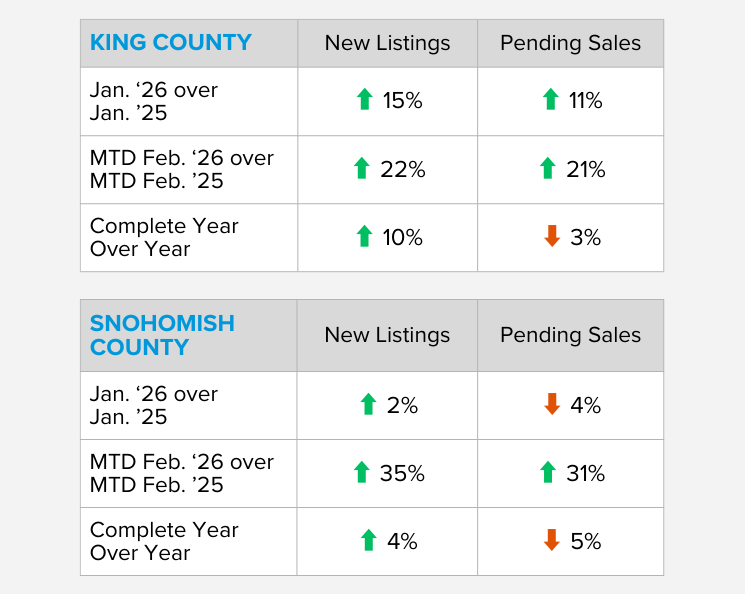
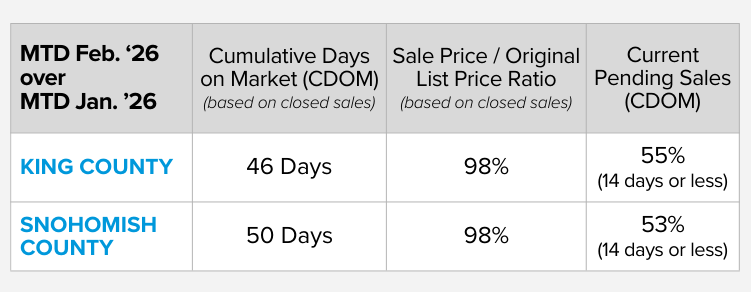
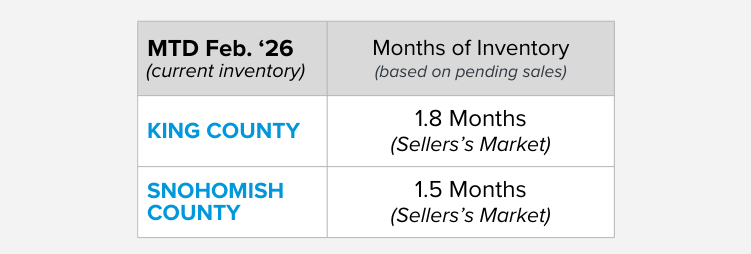
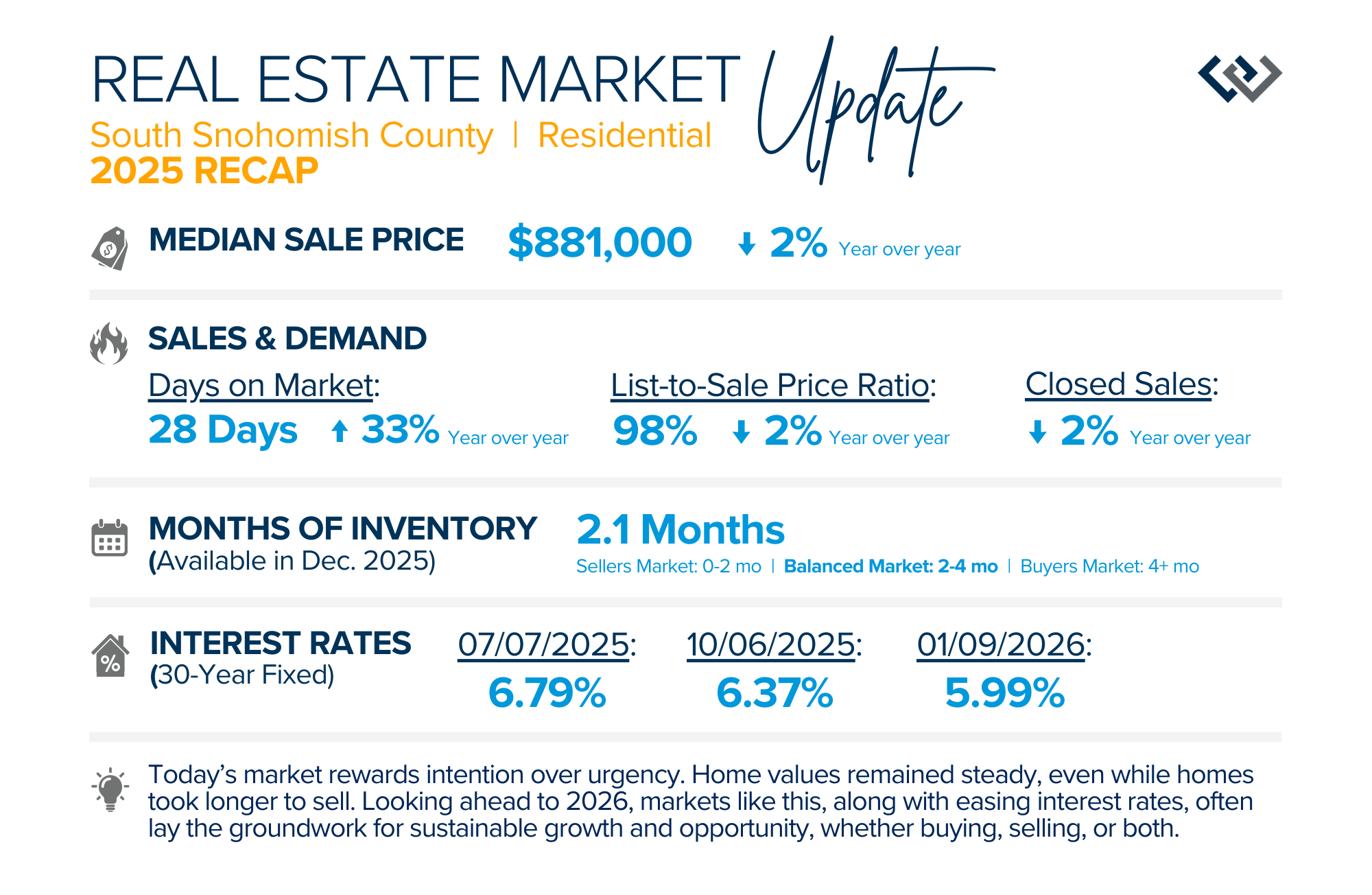
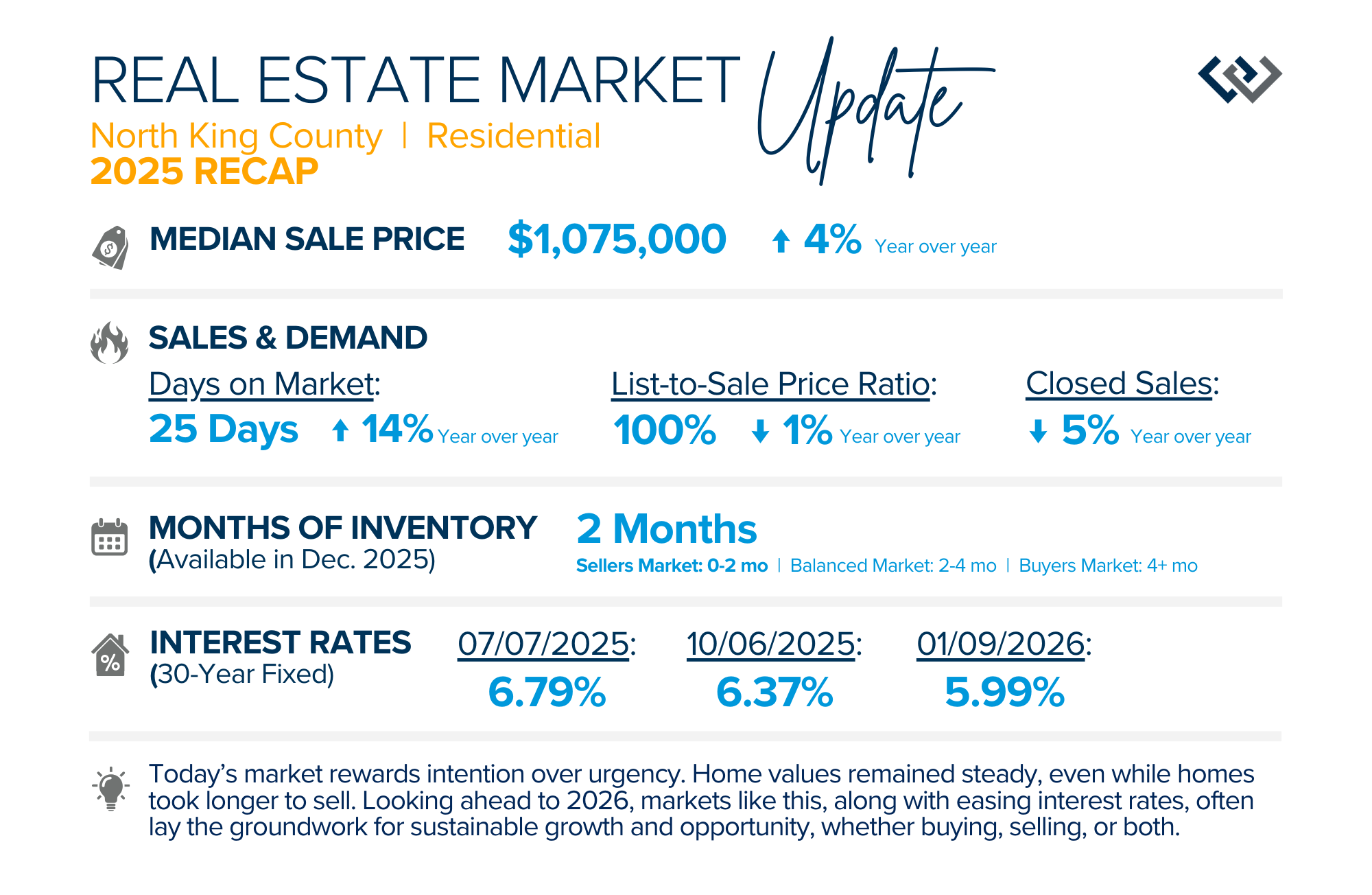
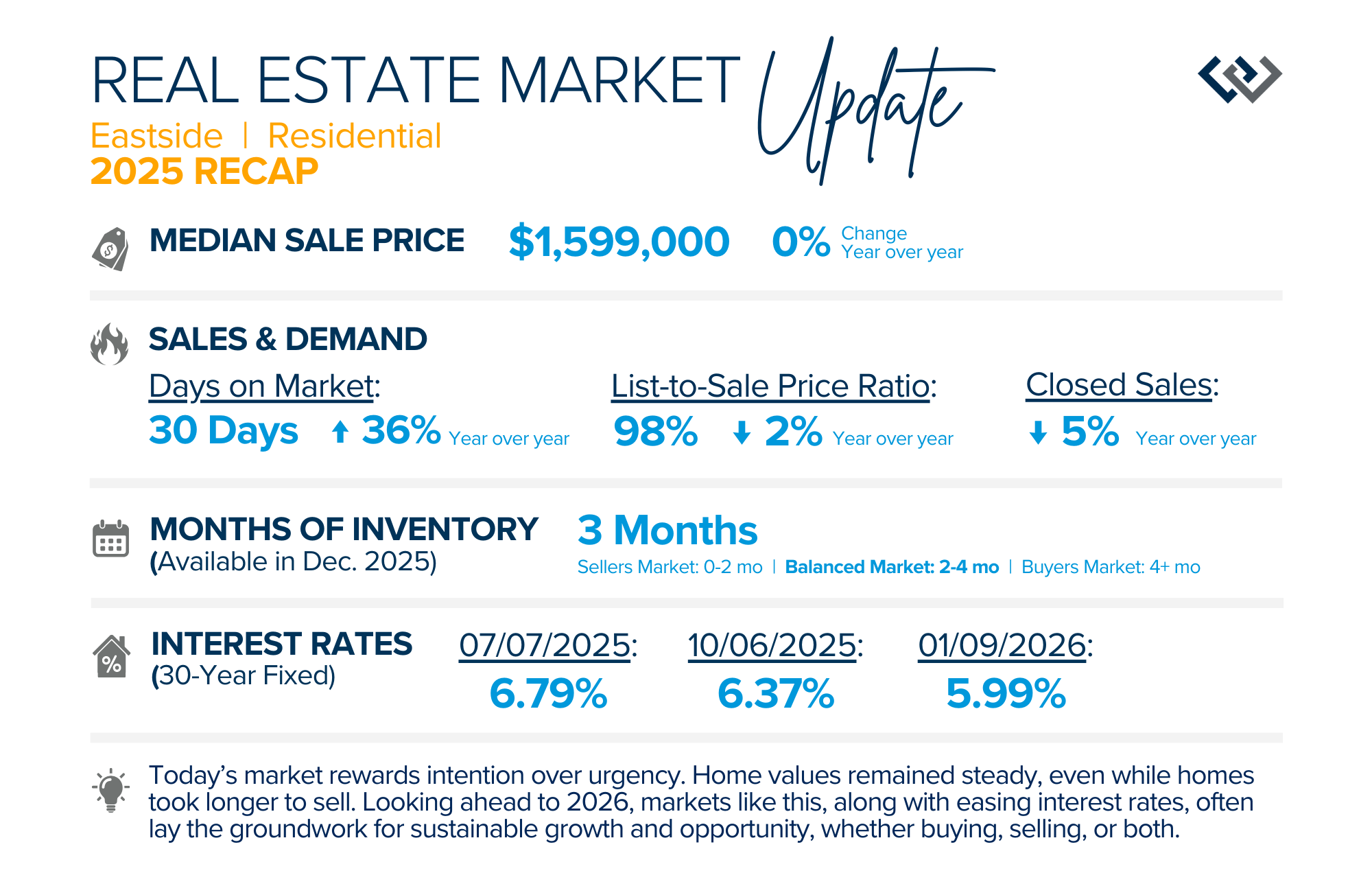
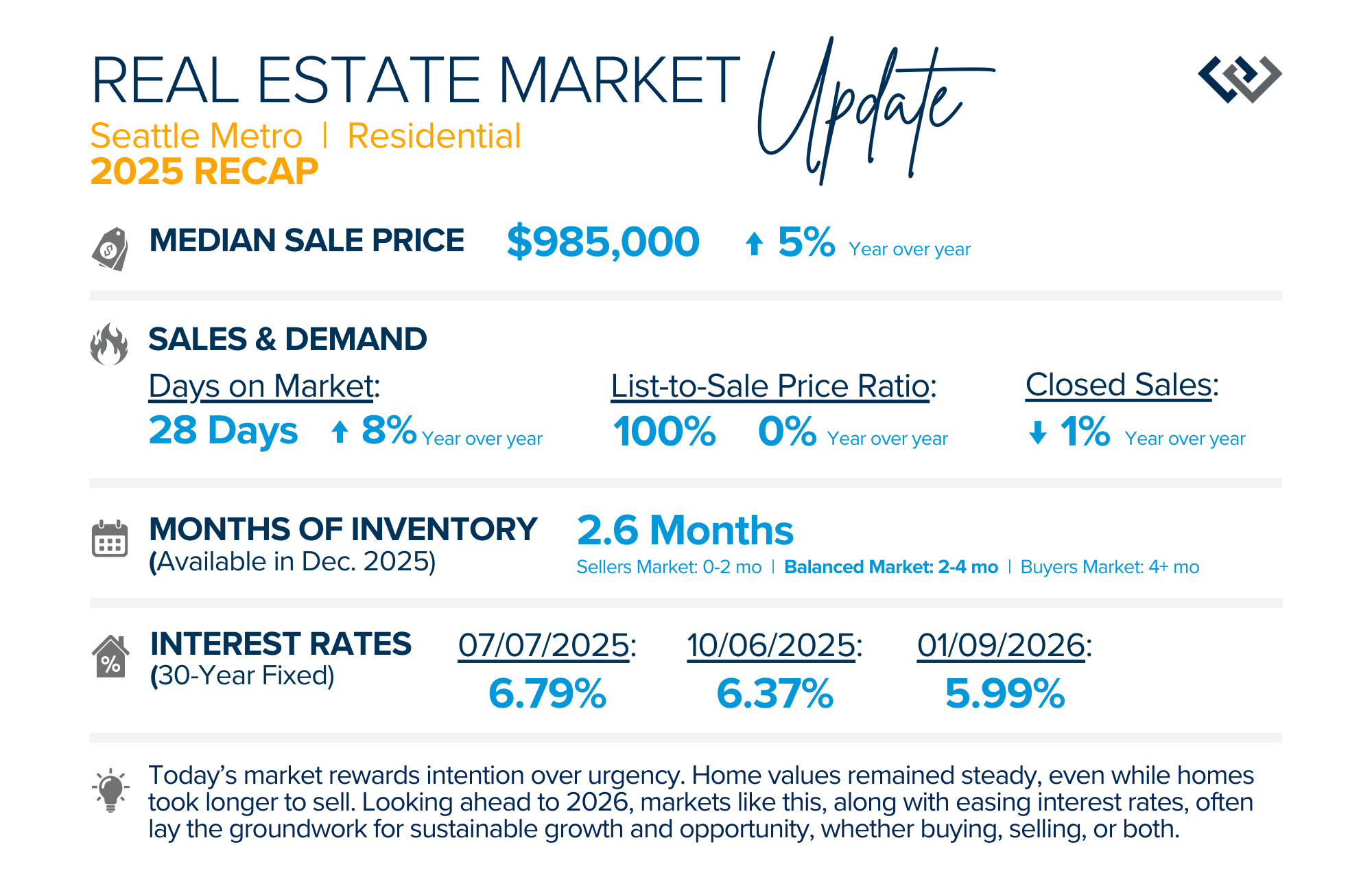
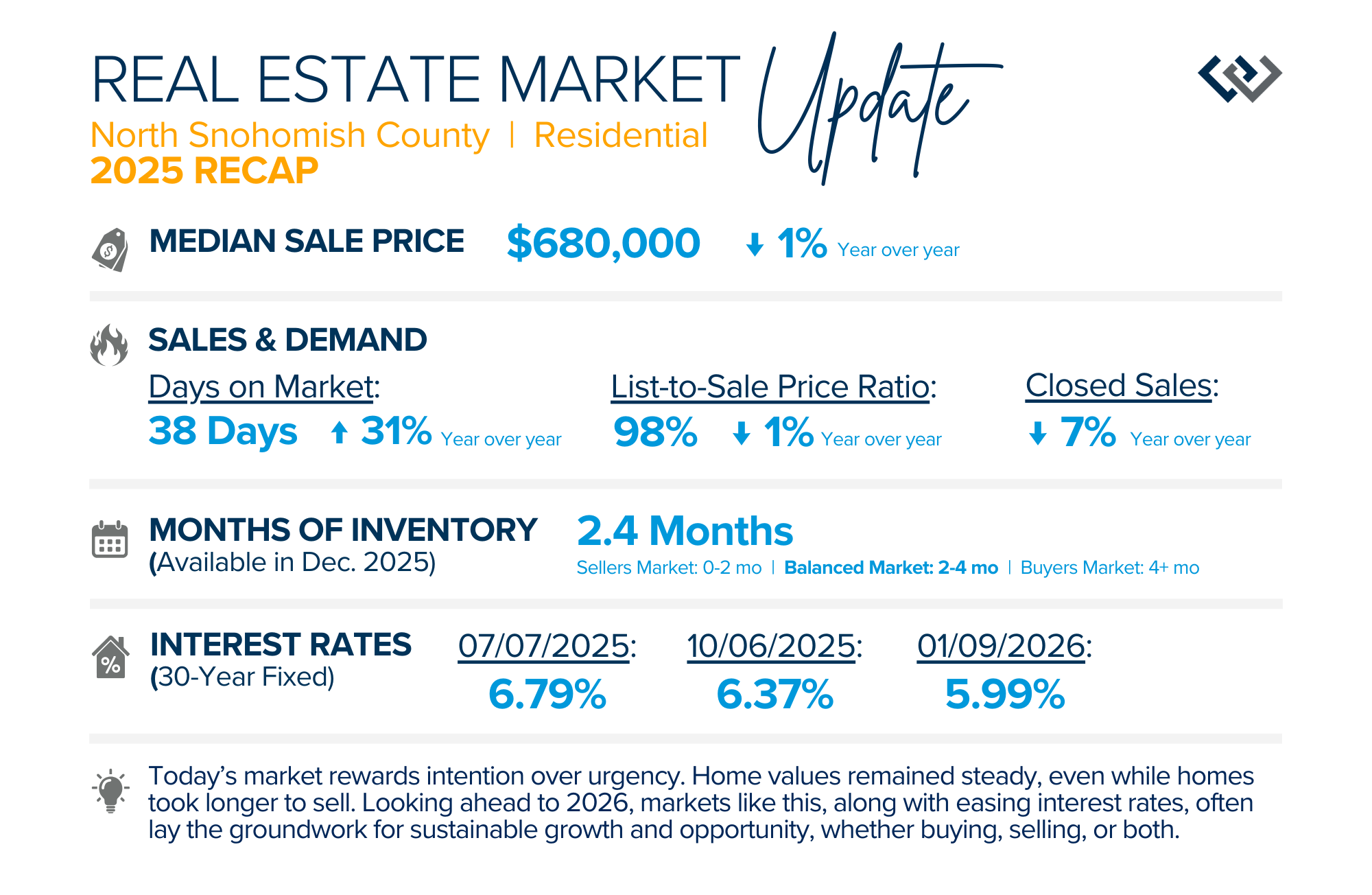
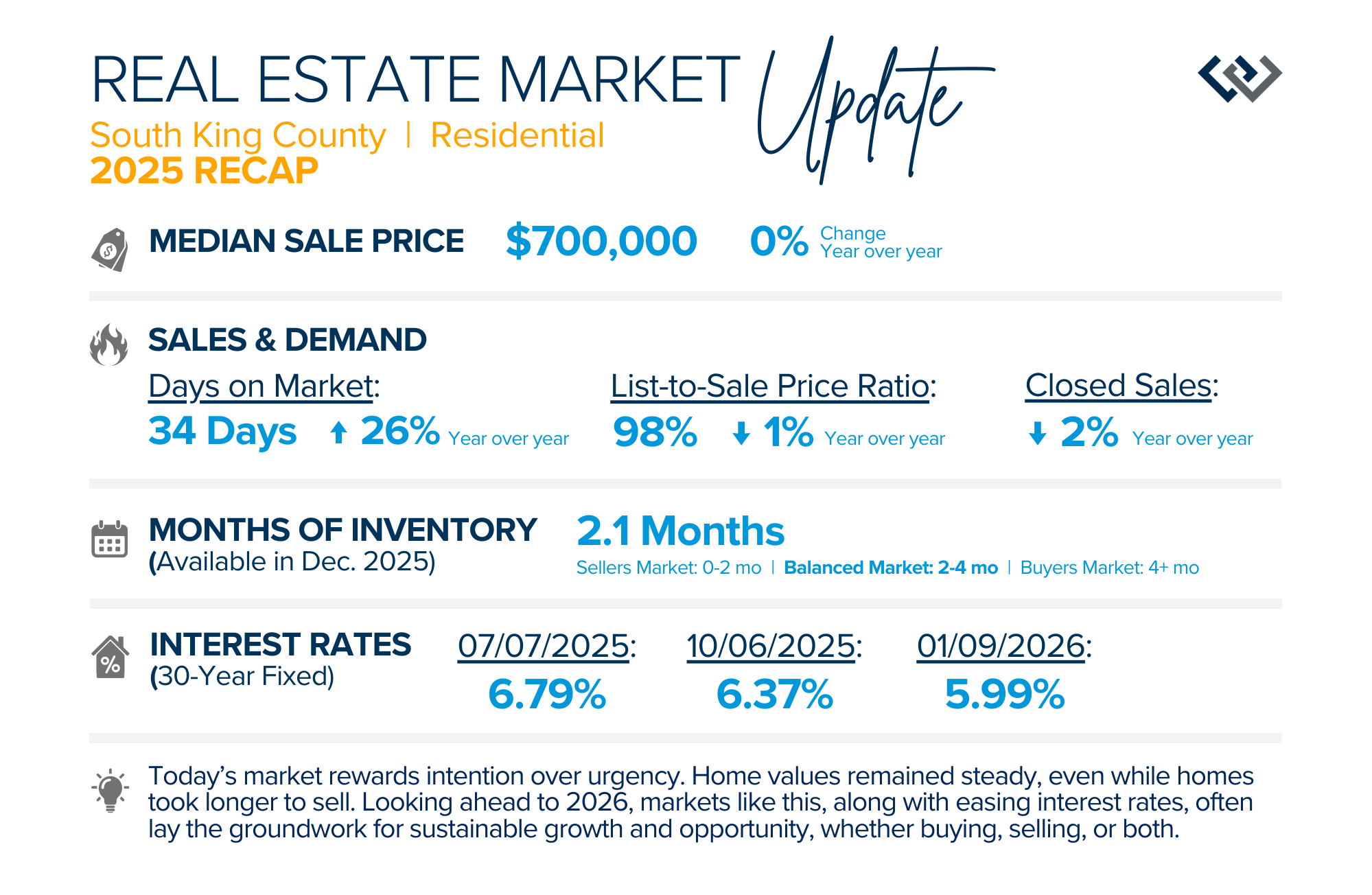
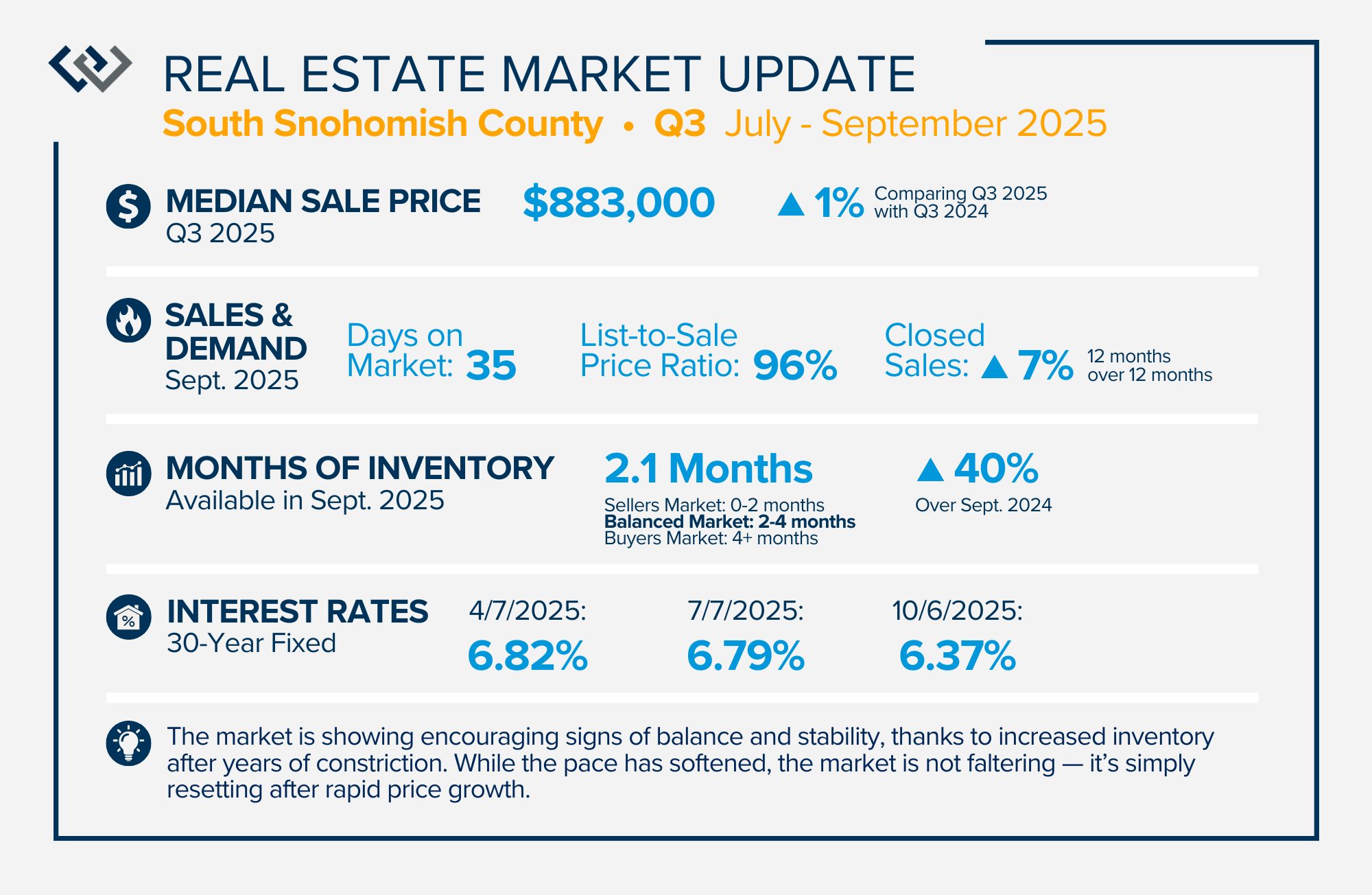
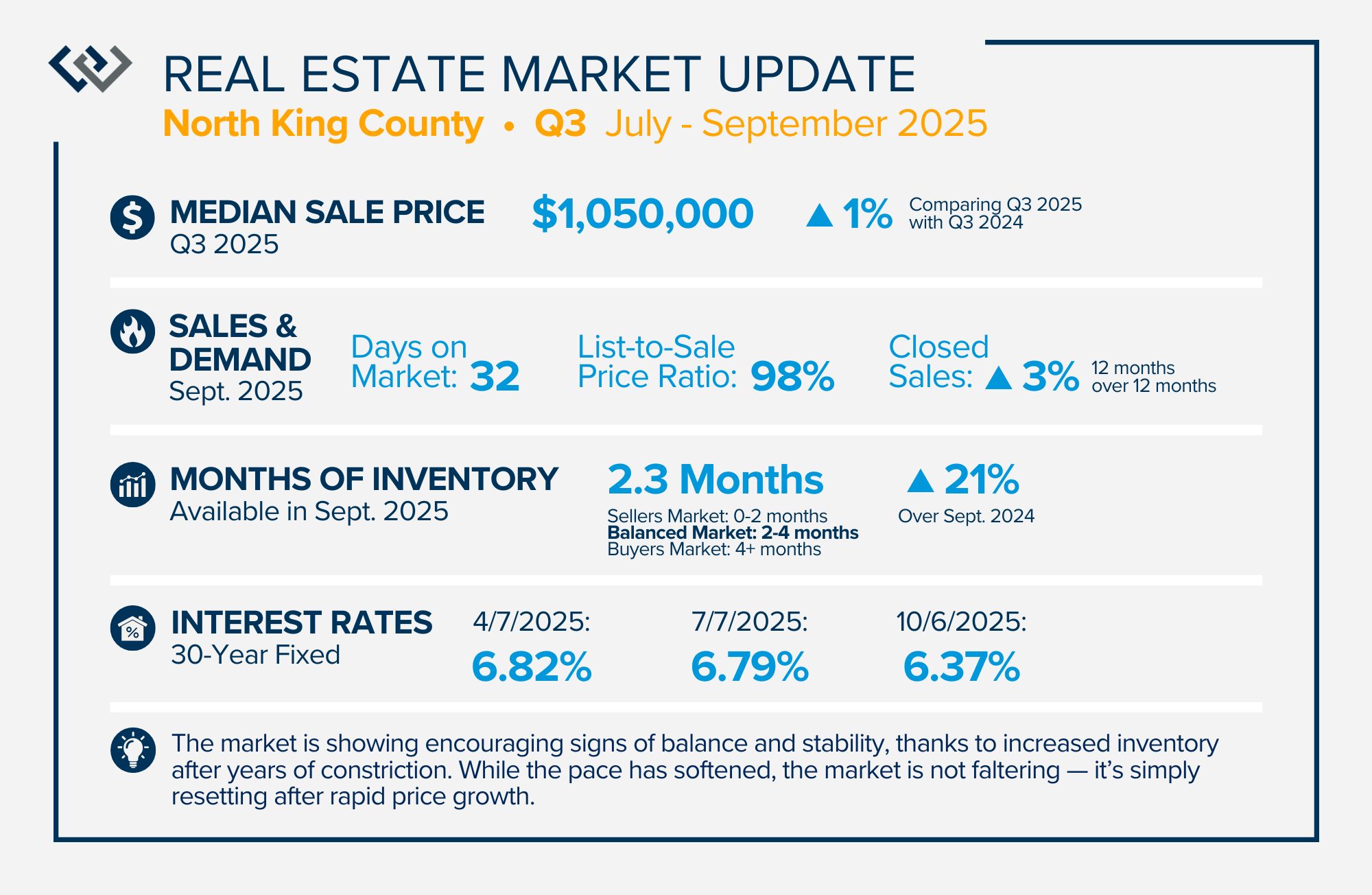
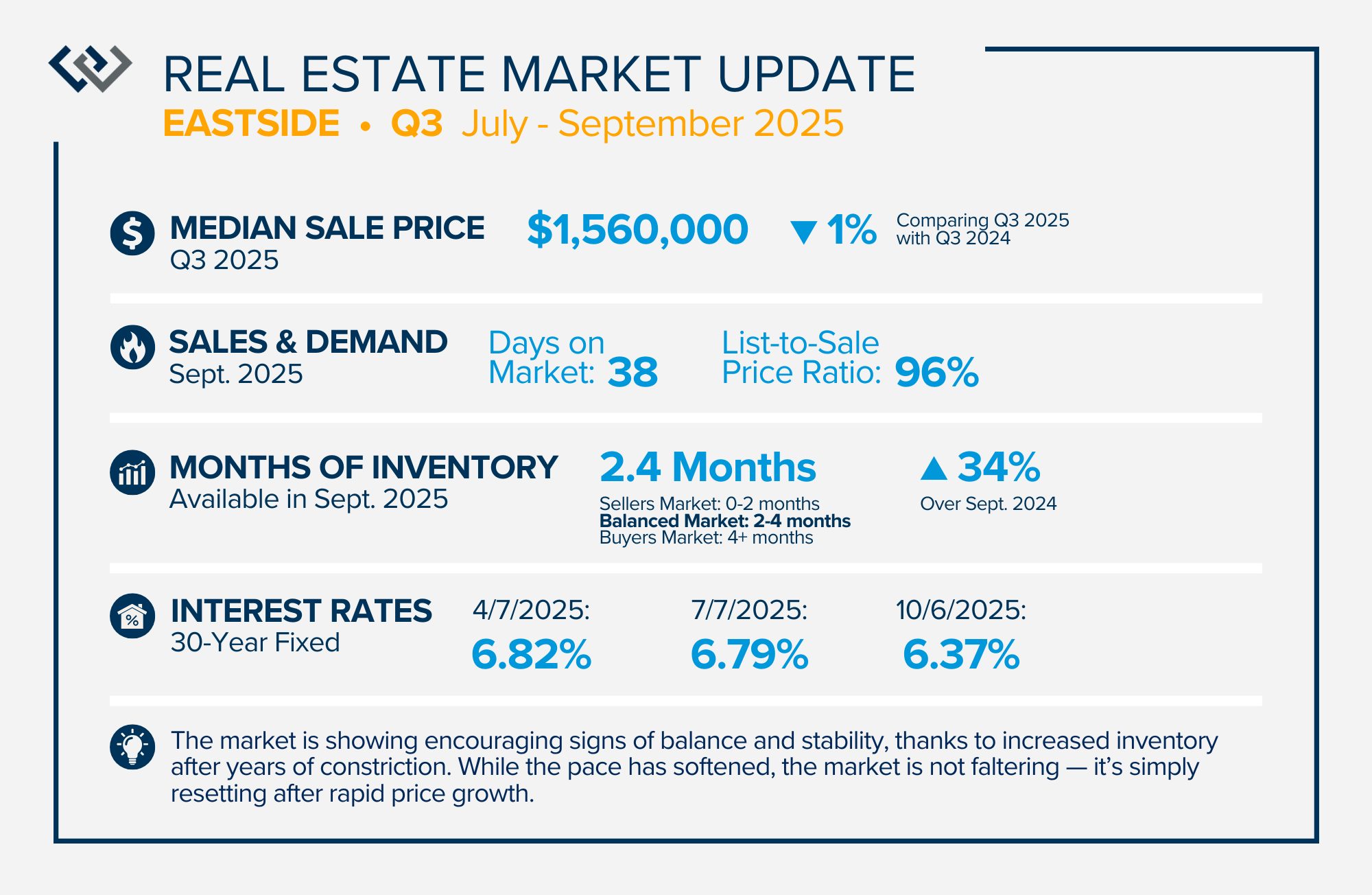
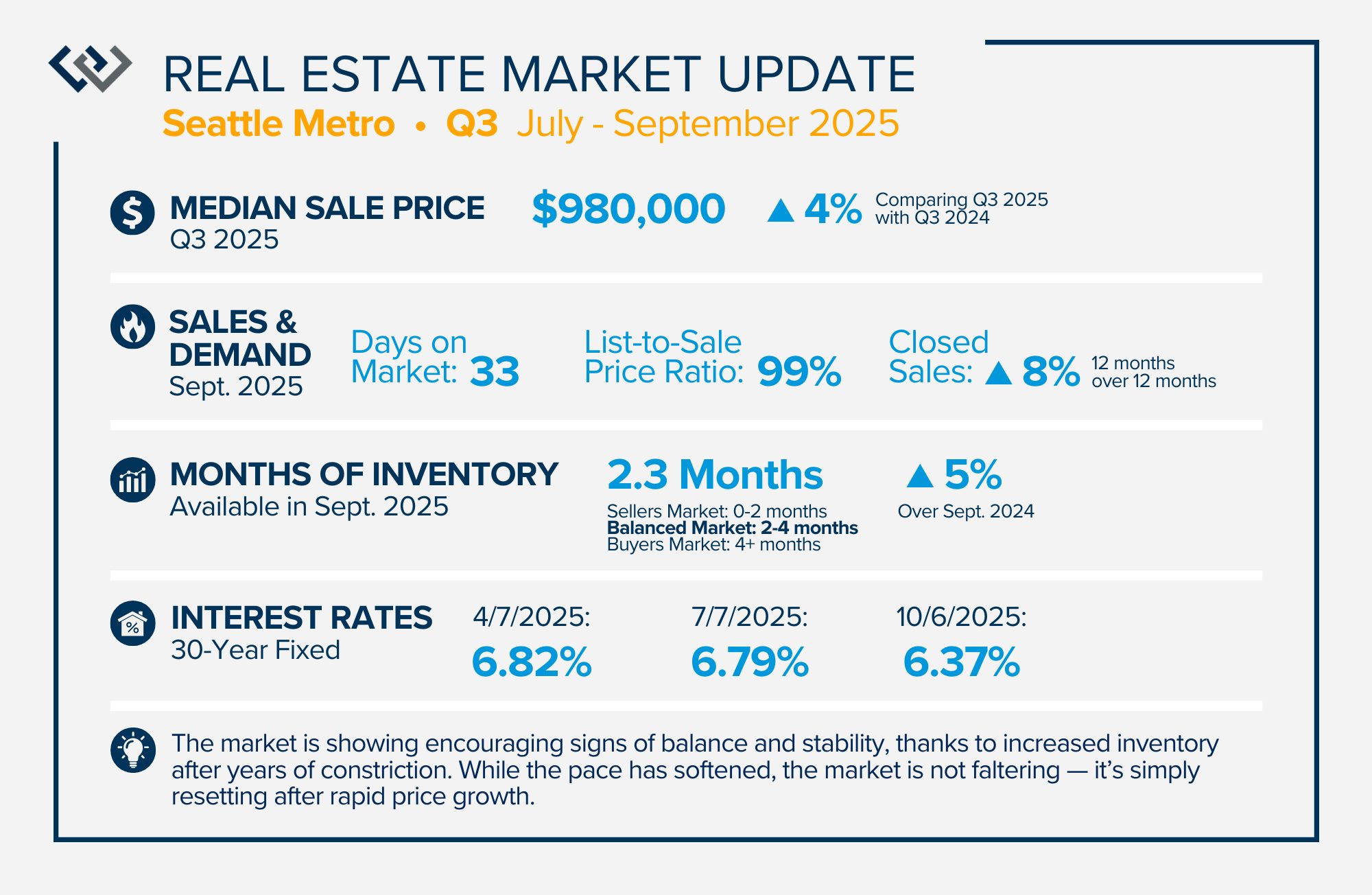
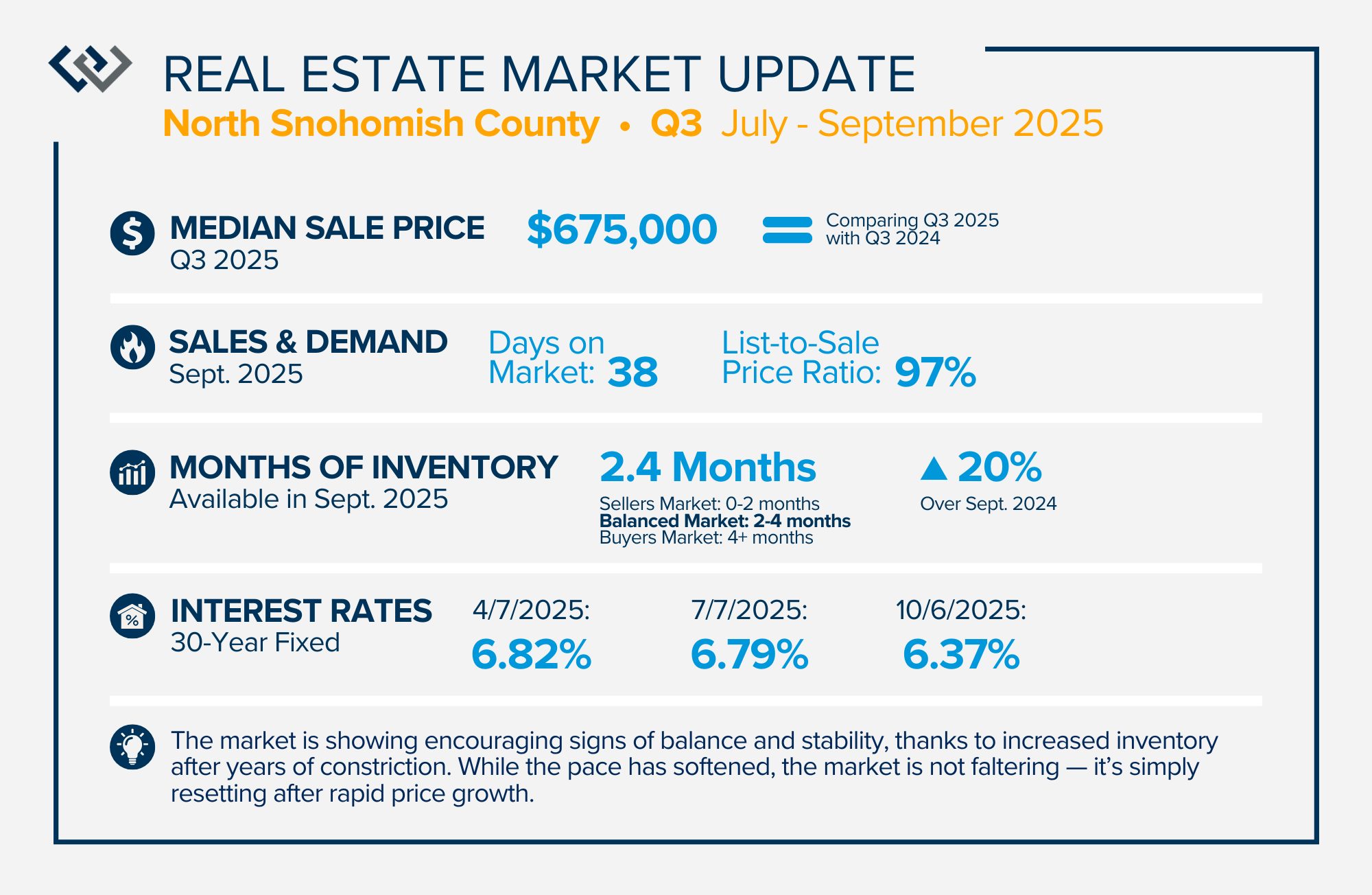
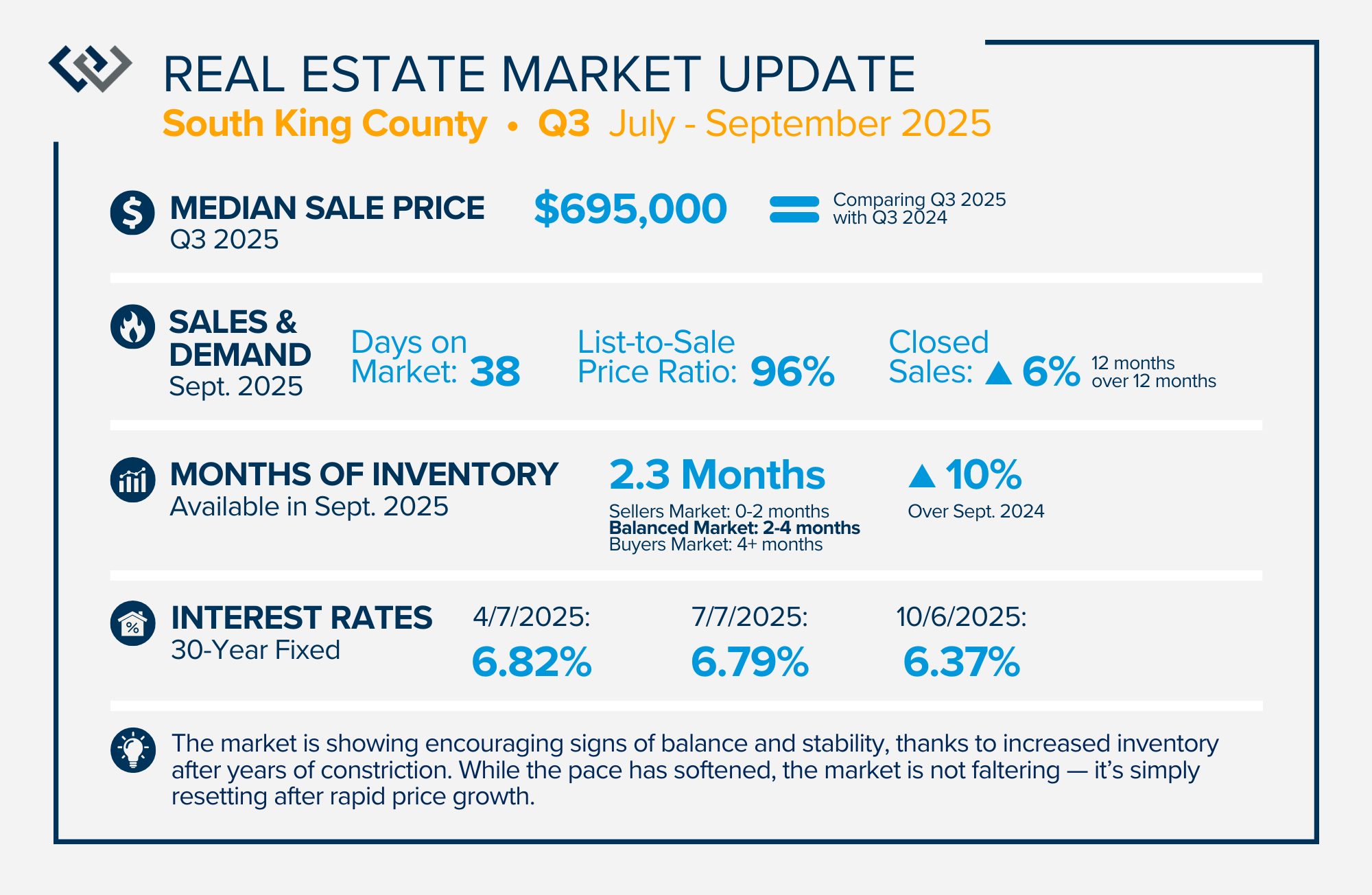
The second quarter of 2025 had a significant increase in the number of available homes for sale. Inventory has returned to pre-pandemic levels, which is bringing more balance to the market. This, coupled with the new normal of interest rates, has decelerated home price appreciation to more historical norms compared to the rapid appreciation that occurred during the pandemic years.
Overall, equity levels are high, and sellers who have owned their homes for five years or more are making substantial returns. With more balance in the market, buyers are experiencing relief and new opportunities. Movement in this market is much more fluid than in the restricted inventory market. If you or someone you know is interested in learning more about how the current trends relate to your goals, please reach out.
As market conditions shift and inventory increases, we are seeing that homes brought to market with sound property maintenance and thoughtful improvements are selling the fastest and yielding the highest returns. Inventory is up 62% year-over-year in King County and 48% in Snohomish County, highlighting the importance of standing out amongst the crowd. With interest rates remaining stubborn, monthly payments are buyers’ biggest concern, and many do not have the funds to make necessary repairs and improvements after a purchase. Eliminating property condition hurdles and even making modern improvements before listing the home is key to a seller’s success in getting their home sold!

Hurdles that we often encounter, which can adversely affect a home’s marketability, include deferred maintenance such as paint, carpet, and system improvements to HVAC, electrical, and plumbing systems. If a house needs a new roof or another central system replaced, this helps mitigate the upfront out-of-pocket expense. We have also seen sellers remodel and update areas of the house, such as the kitchen and bathrooms, to modernize and appeal to a broader audience. Exterior landscaping and junk hauling are also areas that help properly prepare a home for the market. A seller-procured pre-listing inspection often guides these improvements.
This is why Windermere offers two exclusive loan tools to provide sellers with access to funds based on their equity, helping them prepare their properties for today’s market. This approach is more efficient than wading through the red tape and longer timeframe associated with opening a Home Equity Line of Credit (HELOC). The Windermere Ready Loan Program now has two loan programs.
The first program ranges up to $50,000, and the second one ranges from $50,001 to $100,000. Funds for the first program can be available to the homeowner as soon as the same day the application is processed (within minutes), and the second program loans are funded within 10 days of application approval. Approval for both loans are based on the homeowner’s credit score rating and the Windermere broker’s approval of the home’s market value to establish equity within the required loan-to-value ratios. There is no need for an appraisal; both programs provide home sellers quick and easy access to funds via a loan against their equity. Then they can get to work preparing their homes for sale to attract the largest possible buyer audience.
The home equity serves as the basis for these loans, so it does not require employment verification, making this an excellent option for retirees or sellers in a job transition. Over 50% of all homeowners in the US have equity of 50% or more, making this tool the perfect solution to help would-be home sellers prepare their homes for the market and appeal to as many buyers as possible. Plus, there are no up-front costs; the loan fee and accrued interest are paid off at closing.
So, how do these programs work? First things first, contact me, your Windermere broker, as these programs are exclusive to Windermere brokers and their clients. We can evaluate which areas of improvement will yield the greatest return based on market data and trends, establish a budget with bids from my trusted vendors, and devise a winning strategy.
In the meantime, if you want to learn more about how home improvements can help maintain and enhance a home’s value, check out the 2025 Remodeling Impact Report from NAR. This will provide valuable insight. As always, my goal is to help keep my clients up-to-date on the latest trends and empower them to make informed decisions.
My office just had our annual Community Service Day, where we worked with the Snohomish Garden Club, prepping, planting, and working hard to help make sure our local food banks will get thousands of pounds of fresh produce for our neighbors in need.
This is just a piece of the larger puzzle of Windermere’s commitment to community, and my office’s commitment to take on local projects.
Thank you for choosing Windermere and helping make all of this possible!
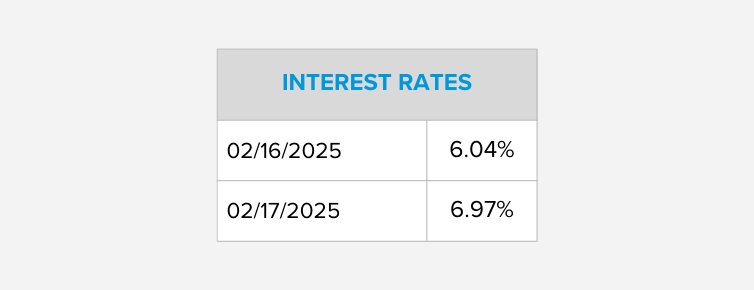
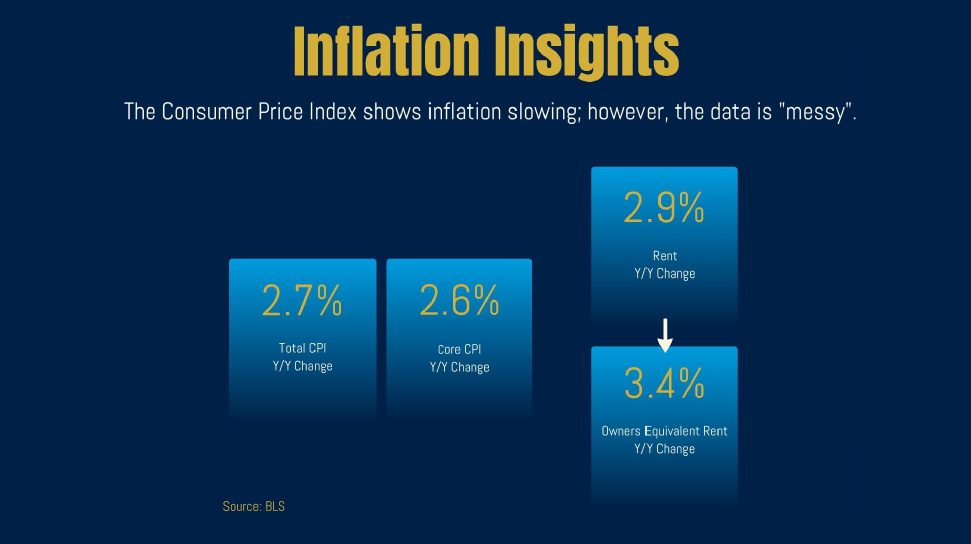
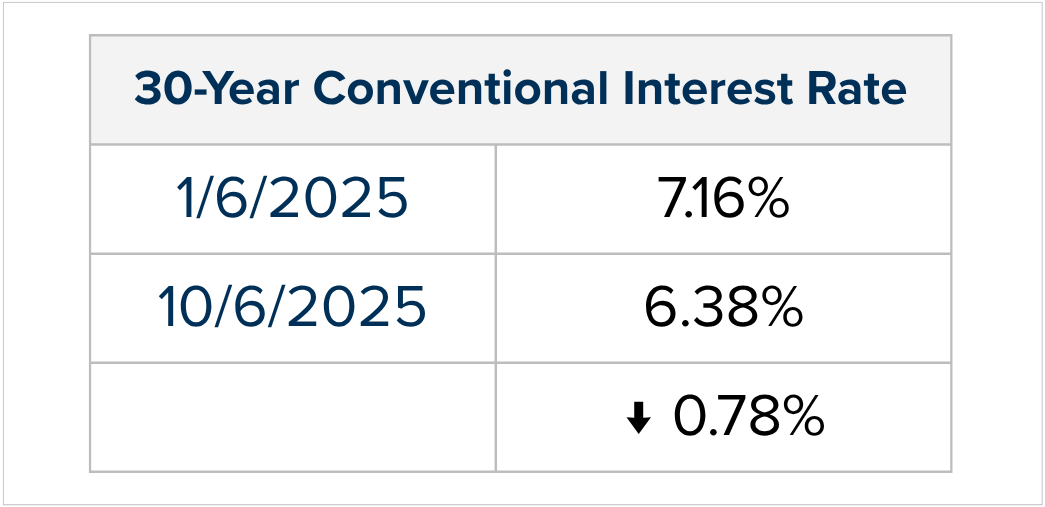
The headlines are swirling about the real estate market. The environment is shifting from a seller’s market to a balanced market, creating opportunities for buyers and holding sellers to exacting standards. The primary factors affecting this shift are inventory levels, interest rates, and consumer confidence. These are the same factors that commonly influence the market conditions, and for the first time since 2018, months of inventory have reached their highest peak. Interest rates have remained stubborn, hovering around 7% for the last six months, and the stock market drama in April took a toll on consumer sentiment.
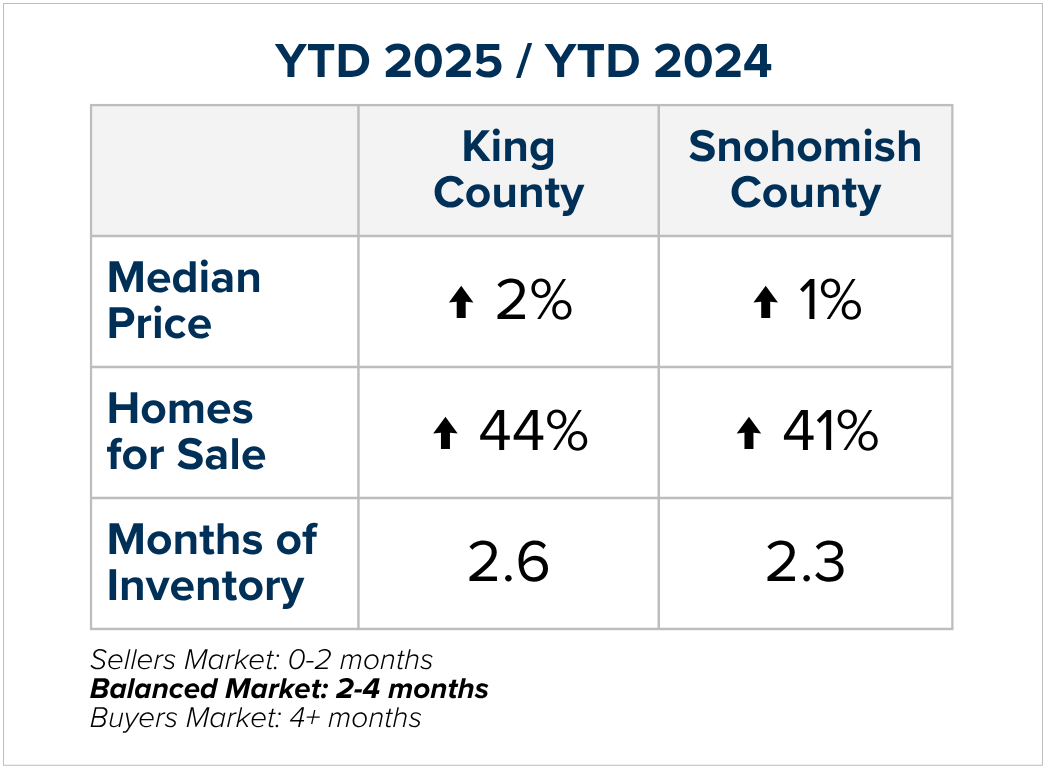
The good news is that the stock market has fully recovered from the April decline; however, the residual effects are likely to have some lasting impact on consumer confidence as they plan their financial decisions. Other good news for buyers is the increase in selection, which allows for more negotiations and can provide the option of a buyer credit. In King County, there were 62% more homes for sale in May compared to the same month last year, and 33% more than in April. In Snohomish County, there were 48% more homes for sale in May compared to the same month last year, and 32% more than in April. It is also important to note that each sub-market, established by price point, location, and property type, can vary. We are currently seeing a mix of sellers’, balanced, and buyers’ markets across the region as inventory increases.
We surveyed our office’s pending sales over the last two months, and one in three transactions had a buyer credit, with an average credit of $14,000. This is where a credit to the buyer from the seller is baked into the contract. Often, this accompanies a full-price offer (from the list price), and sometimes the offer is below the list price. These credits are used to offset the buyer’s closing costs, which leaves more money in the buyer’s pocket post-closing for improvements, a larger down payment, or savings. We are also seeing savvy buyers use these credits to buy down their interest rate, thereby saving on their monthly payment.
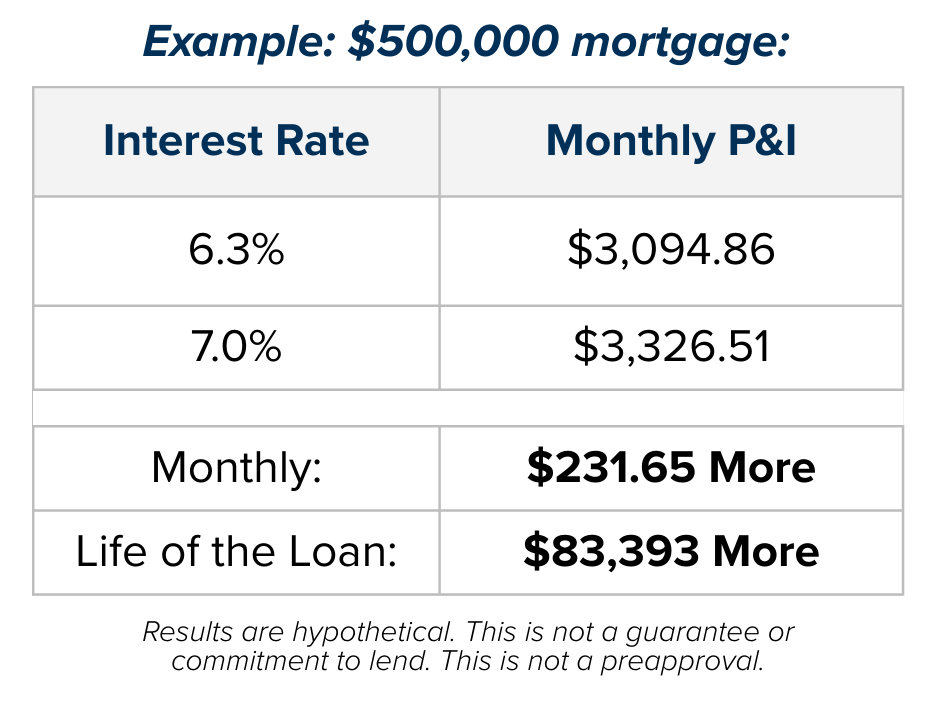
A permanent rate buydown requires approximately 3% of the purchase price to lower the rate by one point for the 30-year term of the loan. A good rule of thumb to remember is that every 1-point decrease in rate equals a 10% increase in buying power. For example, if the rate is 7% and you are qualified for a home at $800,000, and the rate were to decrease by 1 point to 6%, you could now afford $880,000 with a very similar payment. Another way to look at this is simply the monthly payment itself. An $800,000 purchase with 20% down and a 6% interest rate would save a buyer $420.82 a month compared to the payment at 7%.
A permanent buydown is a valuable tool, as is a temporary buydown. It is one of the most powerful tools in today’s market. It costs far less than a permanent buy-down. Here is an example: let’s say you are shopping for a house and have an $800,000 budget, along with a 20% down payment (btw, this works for any down payment amount), given today’s interest rate of 7%. The monthly principal and interest payment would be $4,257.94. You could do a 2-1 buydown (2 points lower in year one and 1 point lower in year 2), which would have your payment in year one be based on an interest rate of 5% with a monthly principal and interest payment of $3,435.66 – a savings of $822.28 a month. For year two, the monthly principal and interest would be based on 6%, resulting in a monthly payment of $3,837.12, a $420.82 savings. The total savings in monthly payments with the 2-1 buy-down over the two years would be $14,917.18.
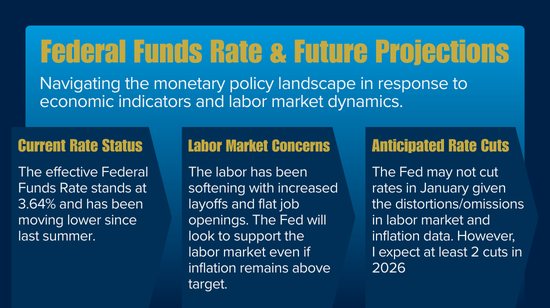
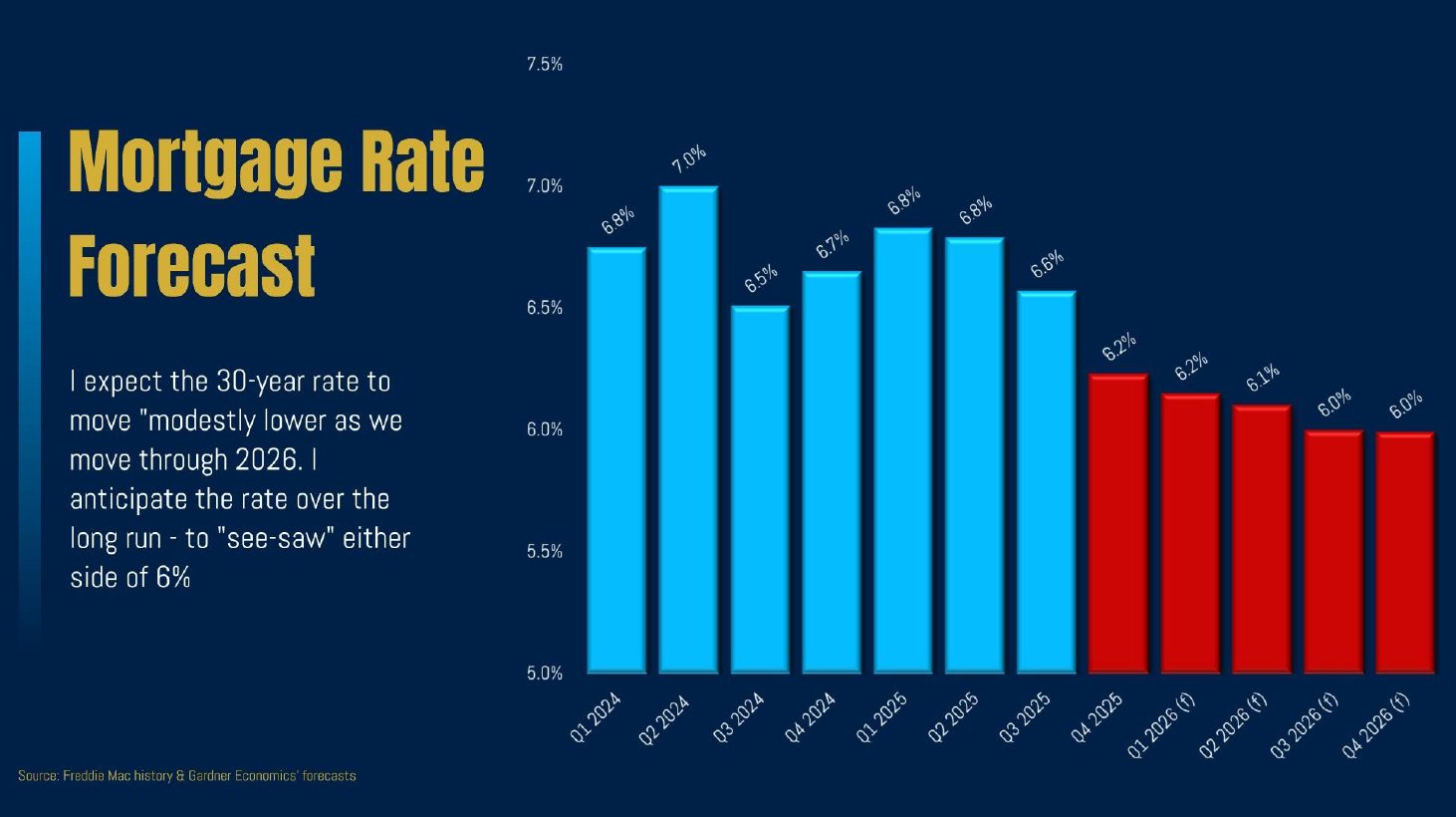
The roughly $15,000 in monthly payment savings is paid upfront at closing and can be provided as a buyer credit by the seller. The buyer still needs to qualify based on the 7% interest rate, as the payments will be converted to those based on the 7% rate in year three and moving forward. The buyer may never have to pay the 7% amount if rates decrease and they can refinance within the two years, permanently locking in a rate below 7%. A bonus is that if the entire $15,000 credit has not been used yet, in some cases, those unused funds can be applied towards the refinance. The latest expert rate predictions are below. While we don’t have a crystal ball to predict when this will happen, I do know that when it does, there will be more buyer competition in the market, which will affect negotiations.
A peculiar aspect of consumer sentiment is that when there is more inventory and the market becomes more balanced, as opposed to a tight market where buyers are competing for limited choices, it confuses buyers. They tend to slow down and think something may be wrong. Savvy buyers will zero in on a house they want and use this time to negotiate better terms for due diligence and possible credits, rather than escalating prices and accepting no contingencies that often occur in a seller’s market. Another benefit to a balanced market is the return of home sale contingencies. This balance of inventory is necessary to introduce this option, and it has been quite a while since we’ve seen this happen. Although they are not commonplace, they are on the rise. This enables the buyer to purchase contingent on the successful sale and closing of their current home. It was how real estate used to be done, and a great option if all lines up.
Now, how does this increase in inventory affect sellers? As mentioned above, it raises the bar on property preparation, accurate price positioning, and overall appeal. When there are more choices, you need to stand out! That is why homes that meet these criteria continue to sell for more than their list price and receive multiple offers. Homes that are brought to market, neutralized, staged, free of deferred maintenance, and appropriately priced are selling quickly. If a home has modern improvements, that helps too, as many buyers prefer move-in condition as they are often using the bulk of their savings for a down payment to create the lowest possible monthly payment.
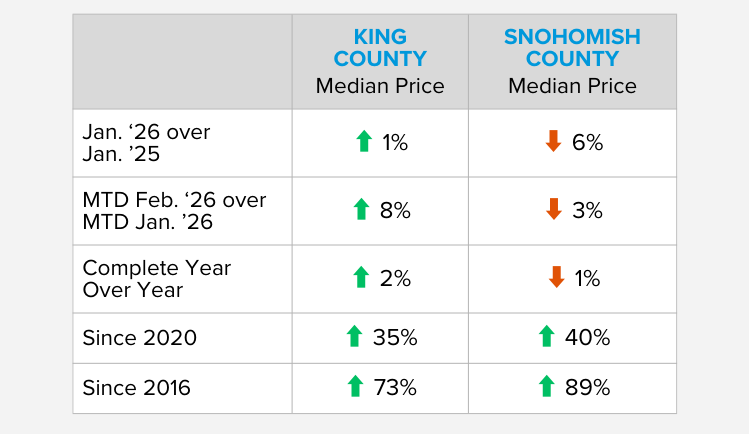
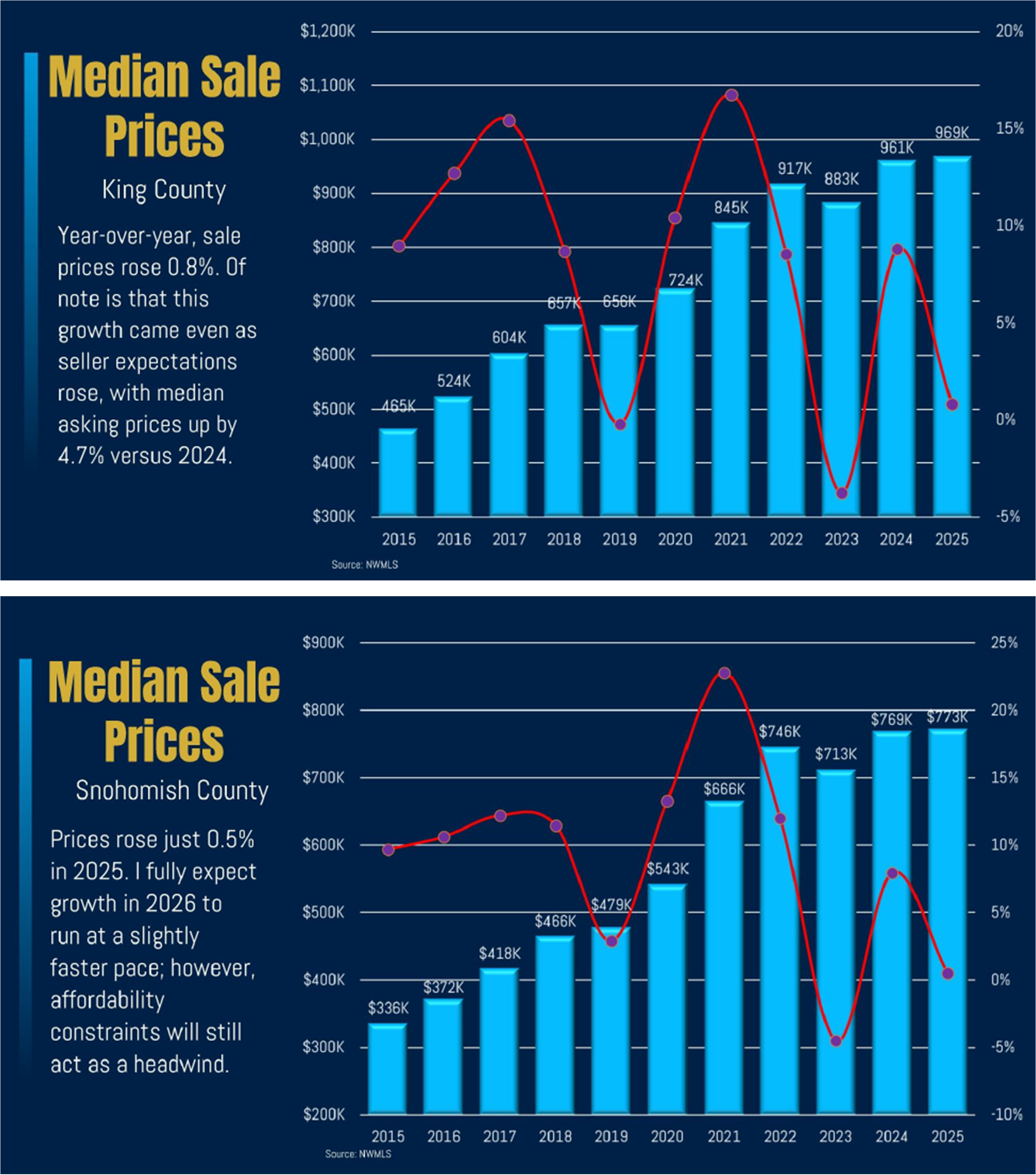
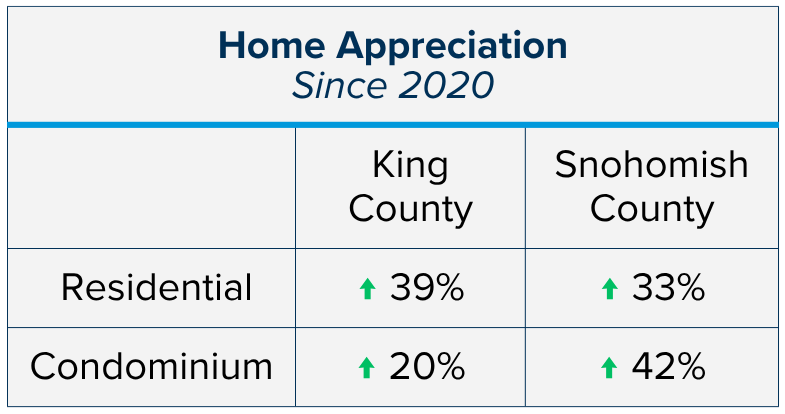
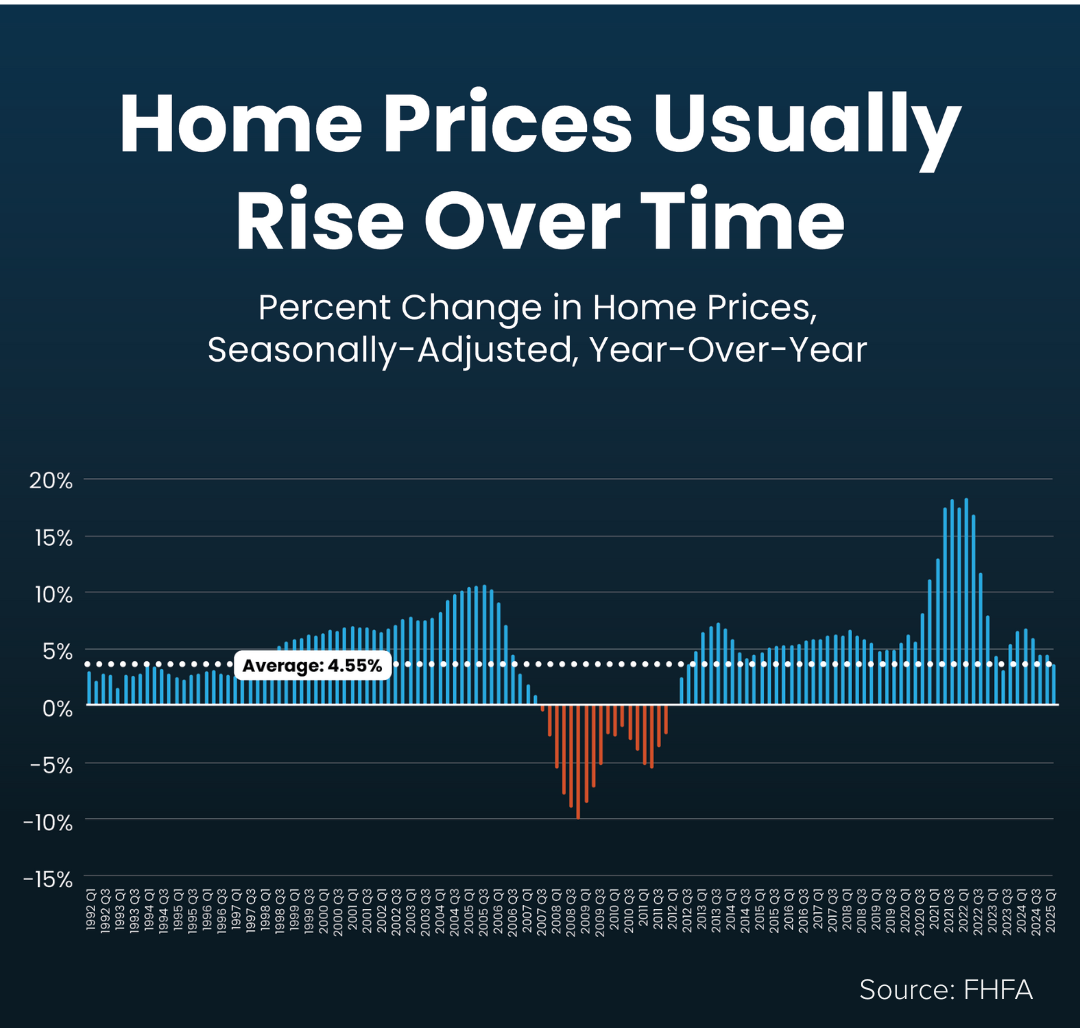
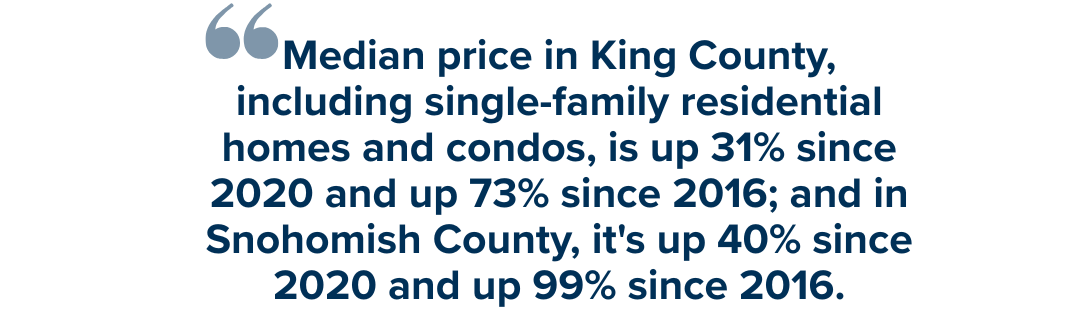
So, what is appropriate price positioning? I will start with the big picture first. Sellers must maintain a long-term perspective and assess their equity growth during their ownership. Single-family residential prices in King County have increased by 91% over the past decade and by 44% over the past five years. Single-family residential prices in Snohomish County have increased by 113% over the past decade and by 52% over the past five years. Sellers have made remarkable gains, and success should not be measured by the froth of a seller’s market, but by the gains of a sale in any market. The big-picture approach often leads to a smooth and profitable transition from one house to the next.
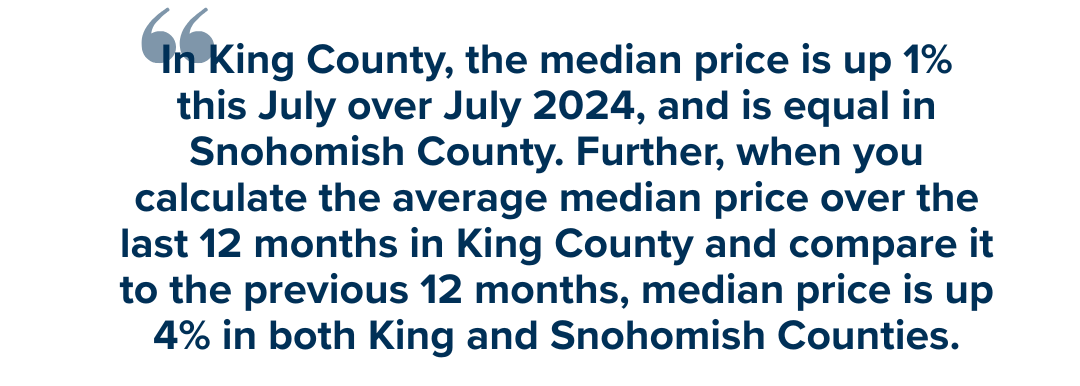
Now, back to the tactics of price positioning. Annual prices typically peak in the spring, and after reviewing the latest May 2025 figures, it appears we have hit the peak for the year. This is about 30-45 days earlier than in 2024 and previous years. Additionally, year-over-year prices are flat and slightly down from 2024, so sellers should consider this when choosing their price with their broker. This, along with the increase in selection, means that sellers need to determine the value point at which a buyer is willing to make an offer when they have more choices. They cannot price based on last year’s market, which had different environmental factors.
One thing we can always count on in life is change. The real estate market is no different. In the case of our local real estate market, this change sits on the shoulders of monumental growth. There is always an opportunity within the change, and staying close to the data helps unearth this. I’m encouraged by the balance in the market and look forward to helping my clients navigate their life transitions in the most effective way possible. Research, data, and listening to my client’s goals are the backbone of my approach. If you or someone you know is experiencing significant life changes that a move could help with, please reach out. We can discuss the big picture, apply the data, and chart a custom plan together. It is always my goal to help keep my clients well-informed and empower them to make strong decisions.